The Clock That Replaced the Open Door
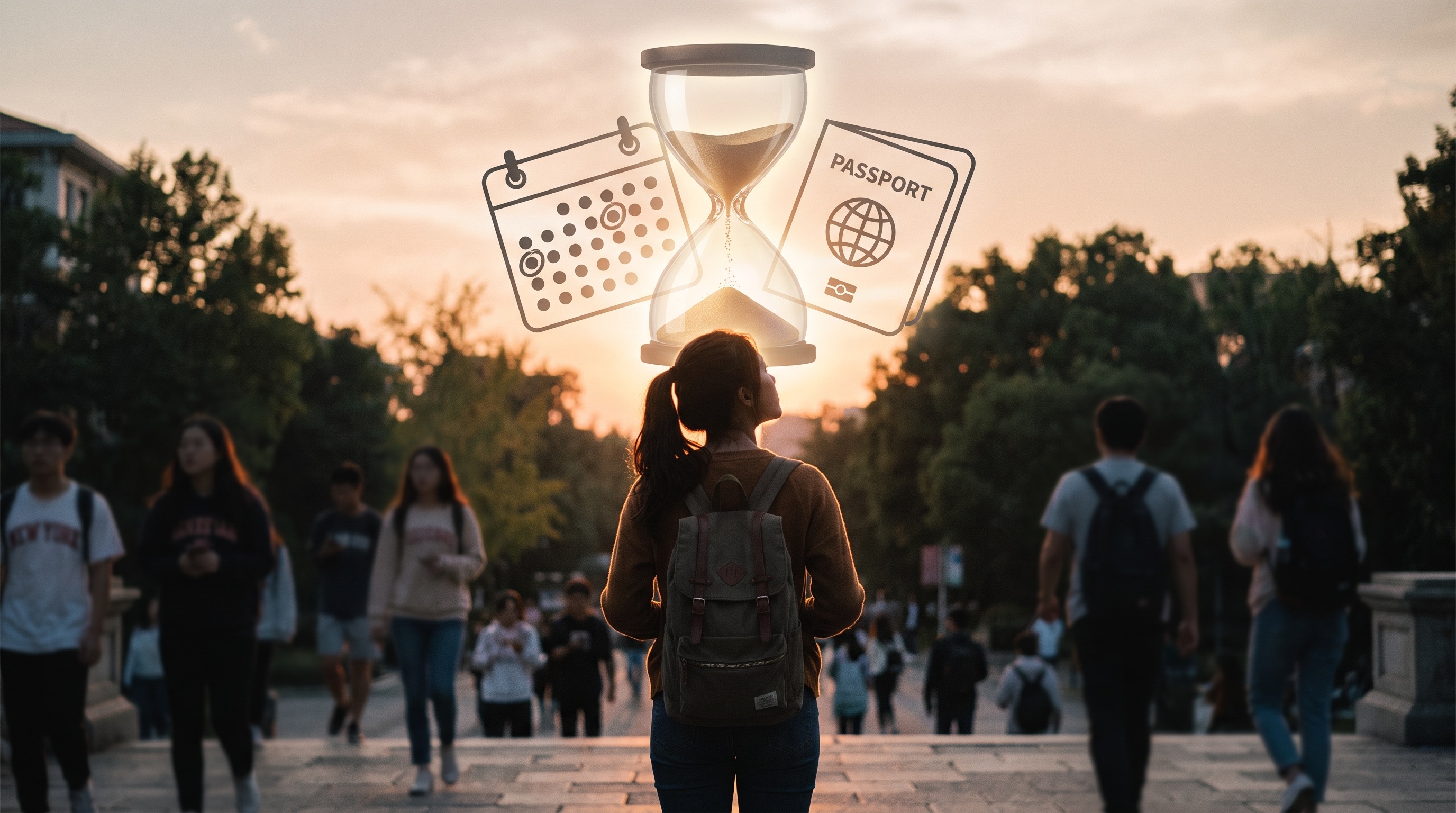 For decades, an international student's stay was measured by a degree. Starting this autumn, it is measured by a clock.
There is a phrase buried in US immigration law that almost no international student ever thinks about until the day it saves them or the day it disappears. The phrase is "duration of status." For nearly forty years it was the quiet architecture of the whole experience: when you arrived on a student visa, you were admitted not for a fixed number of years but for as long as you were genuinely a student. Finish a bachelor's, roll into a master's, drift into a PhD — the government did not need to re-approve you at each door. Stay honest, stay enrolled, and time was on your side.
On 17 July 2026, the Department of Homeland Security replaced that open door with a clock. And I want to walk through what actually changed, because the headlines have been louder than they've been clear, and because I have spent enough years inside this system to know that the difference between panic and preparation is usually just accurate information.
A note on what this is and isn't: I write about the F-1 journey from lived experience, not from a law office. Everything below is the shape of the rule as published, not legal advice. When it's your status on the line, your DSO and the official USCIS guidance are the only sources of truth.
What the rule actually says
Beginning 15 September 2026, students entering on F-1 and J-1 status will no longer be admitted for "duration of status." Instead, they will be given a fixed period of stay — the length of their program as listed on the I-20, capped at a maximum of four years, plus the familiar 30-day grace period at the end.
Read that twice, because the cap is the sharp edge. Not four years per degree. Four years, full stop, as the ceiling on a single admission.
If your program runs longer than that — and a great many do — you do not simply continue. You must file an Extension of Stay application with US Citizenship and Immigration Services and wait for a human being at a government agency to say yes. The old system renewed your right to stay through your behaviour: keep your enrolment clean and you kept your status. The new system renews it through an application: keep your enrolment clean, file the paperwork, pay, wait, and hope.
Why four years is a strangely short number
Here is the part that turns a bureaucratic footnote into a real problem for real people.
Four years sounds generous until you look at how long American degrees actually take. By the US government's own education statistics, the typical bachelor's degree takes a median of 52 months — already past the four-year line. A PhD runs, on average, closer to 5.7 years. A student who arrives for an undergraduate degree, discovers research, and continues toward a doctorate — the exact path this country has spent generations bragging about — now runs into a wall somewhere in the middle and has to ask permission to keep climbing.
And permission, the rule is careful to note, is not guaranteed. DHS offers no promised approval rate. It lists reasons an extension might be justified — a compelling academic reason such as a change of major, or a documented medical condition — but it makes no commitment about how often the answer will be yes, or how long the waiting will take. For graduate students the constraints are tighter still: the rule restricts changing programs midstream, closing off the improvised, follow-the-curiosity path that produces so much good work.
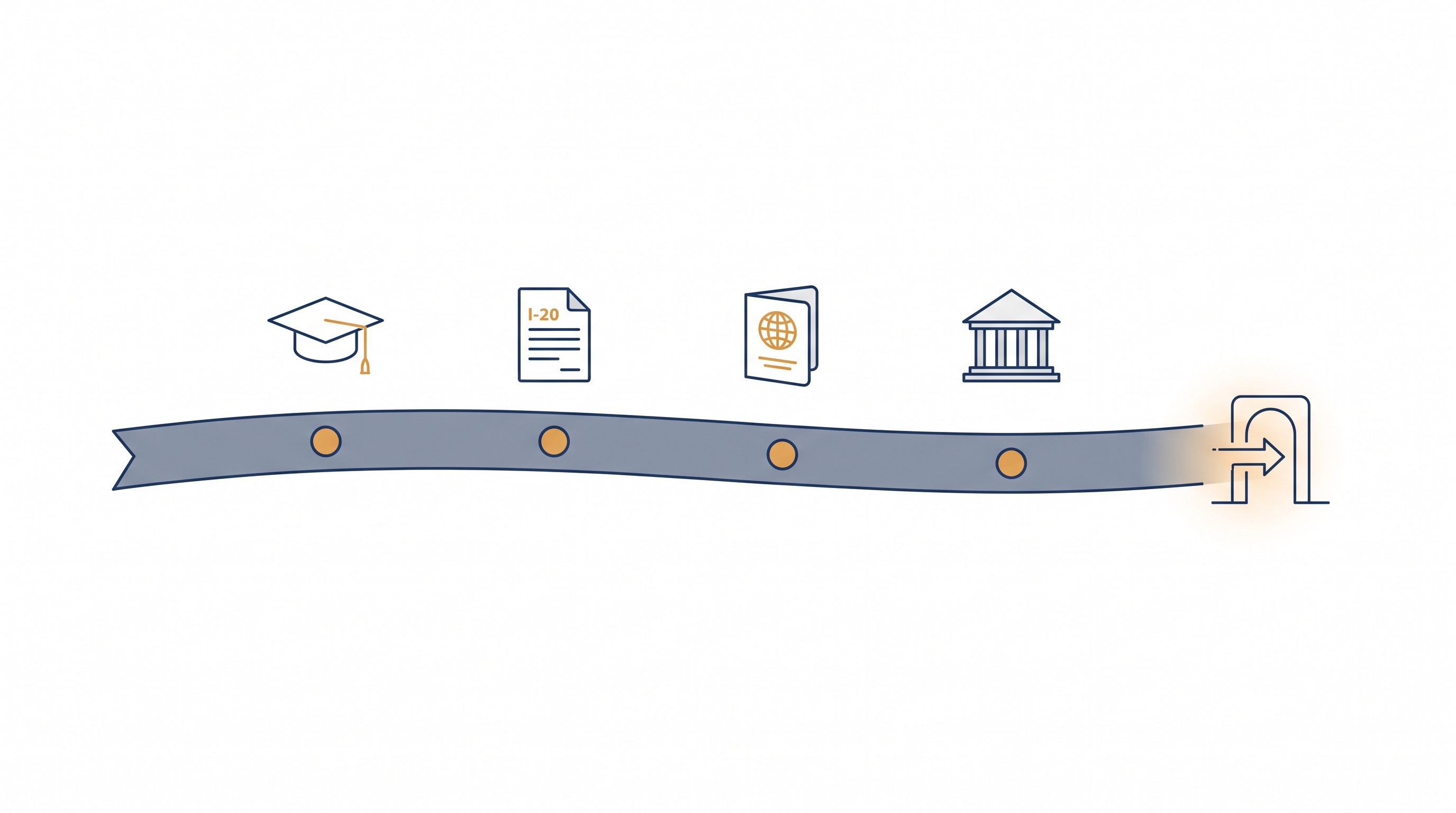 The new shape of the journey: a fixed runway, milestone by milestone, and a checkpoint at the end that used to be automatic.
DHS itself concedes, in the flat language these documents use, that enrolment of foreign students "may decline" — while admitting it "is unable to quantify the extent of this decline." That is an unusually honest sentence for a government to publish. It means: we know this will cost us students, and we don't know how many.
What I would actually do about it
I have watched enough classmates lose sleep over immigration to know that anxiety is not a plan, so here is the plan I'd give a younger version of myself arriving this autumn.
Treat the clock as real from day one. Know your admission date and your four-year ceiling the way you know your own birthday. The students who get hurt by rules like this are almost never the ones who saw them coming; they're the ones who assumed the old grace of the system would quietly carry them.
Line up the extension before you need it, not after. If your program is honestly going to run past the ceiling, the Extension of Stay is not a someday problem — it is a calendar item, filed early, with time built in for a government queue that will not care about your thesis deadline.
Keep your record spotless, because it now matters twice. Under the old system a clean SEVIS record kept you in status. Under the new one, that same clean record is also the evidence your extension will be judged on. Full course loads, authorized work only, no gaps. The discipline that used to be about staying is now also about renewing.
Keep every document. I-20s, approval notices, transcripts, the paper trail of a life lived in good standing. In a system that now asks you to prove yourself again mid-journey, your archive is your defence.
The thing worth saying out loud
It would be easy to end this as pure logistics — deadlines, forms, filing tips — and leave the larger thing unsaid. But the larger thing is the reason I wrote it.
For a long time, America's message to ambitious students from places like the one I come from was essentially: come, and stay as long as you are building something. The duration-of-status rule was the legal expression of that promise. It said the country was betting on the arc of a person, not auditing them year by year. Replacing it with a four-year clock and a discretionary renewal is not the end of that promise, but it is a quieter, more conditional version of it — a door that used to stand open now fitted with a lock and a form.
I don't think the right response is fear. Students from my part of the world have navigated harder gates than this one, and the ones who thrive are the ones who read the rules early, plan against them coldly, and refuse to let a policy shrink their ambition to fit its calendar. The clock is real now. So learn exactly what time it is — and then get back to building something worth the extra paperwork.
If you're an international student or you advise them, I'd value your read on this — especially the practical question of how the extension queue actually behaves once it's live. Share it with someone who's arriving this autumn; a rule you understand early is a rule that can't ambush you.
Sources: DHS final rule published 17 July 2026, effective 15 September 2026, as reported by Forbes, the Erickson Immigration Group, and Brookings; degree-length figures from the US National Center for Education Statistics.
Related: F1 Student Journey · Opt Cpt Application · International Student Journey Bangladesh To Usa