Seed Funding — How the First Real Money Works
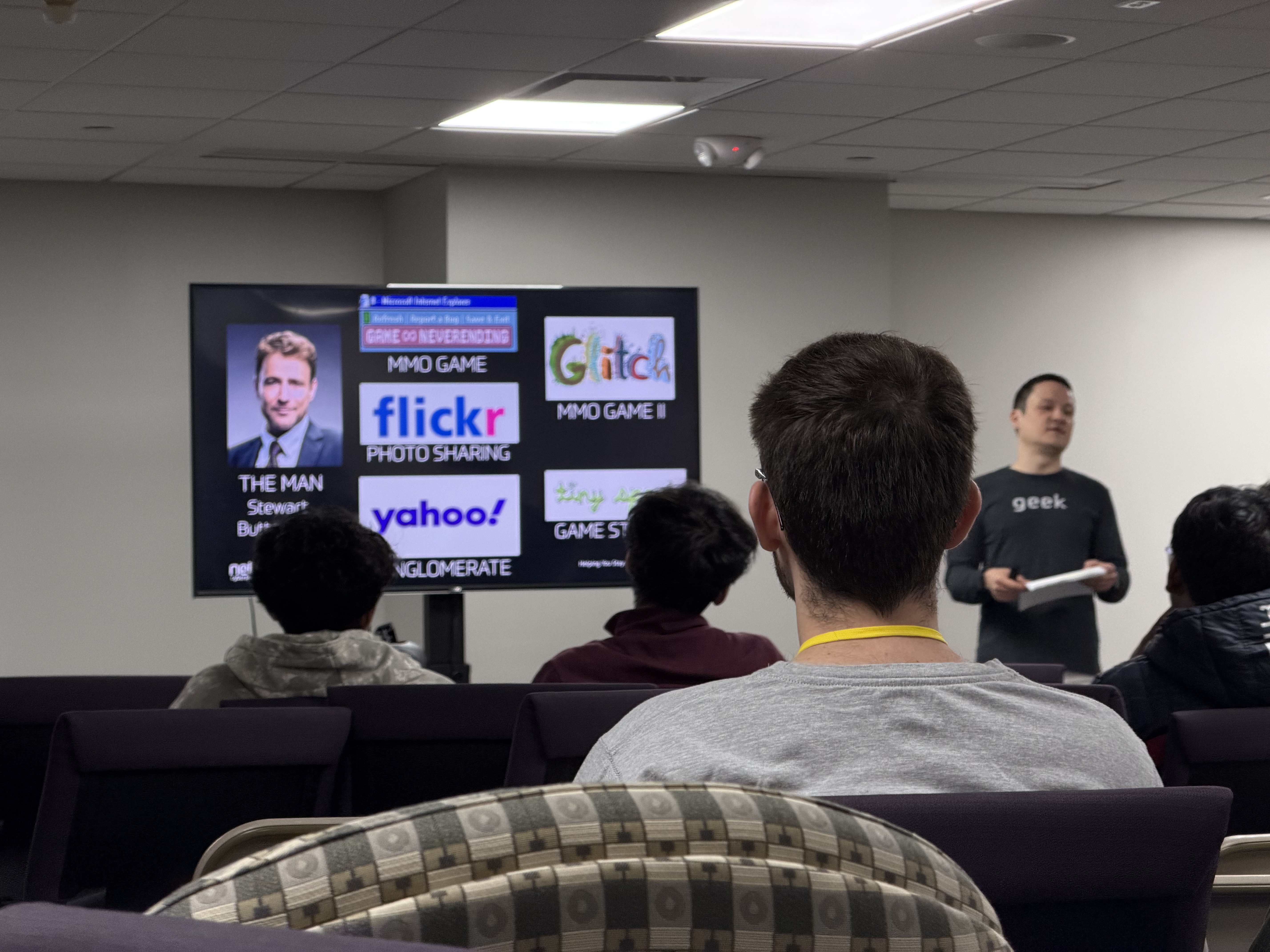 Founder stories (here, the Flickr → Slack pivot) are case studies in what investors actually back.
Seed is the first institutional money a startup raises — the round that takes you from an idea and a prototype to enough traction to raise a Series A. It's romanticized a lot; the mechanics are actually pretty knowable. Here's the honest version.
What seed is for
Seed money buys you time to find product-market fit — usually 18–24 months of runway to build the product, get early users, and show a growth signal that justifies a bigger round. You're not selling profits yet; you're selling a credible path to a very large outcome.
 Each round is a rung, not a finish line — you raise to reach the next stage, from a seed idea up toward a Series A.
What you raise on
Roughly in order of how much leverage each gives you:
- Traction — real users, revenue, or usage growth. Beats everything else.
- Team — why these founders win this market (unfair advantage, deep domain insight).
- Market — is the prize big enough for a venture-scale return (think billions, not millions of TAM).
- Product & insight — a sharp, contrarian "why now" thesis.
 "That's our WHY." A sharp, honest reason for existing is worth more than any projection.
Investors are pattern-matching for a company that could return their whole fund. If your honest ceiling is a nice $10M business, VC is the wrong fuel — bootstrapping may be better.
The instruments
- SAFE (Simple Agreement for Future Equity, from Y Combinator) — the modern default at seed. You take money now; it converts to equity at the next priced round. Fast, cheap, standard. Key terms: valuation cap and sometimes a discount.
- Convertible note — similar, but technically debt with interest and a maturity date.
- Priced equity round — you set a valuation and sell shares directly. More legal work; common at larger seeds.
Watch dilution: each round sells a slice of the company. Raising too much too early at a low valuation can leave founders with too little by Series A.
The process
- Get warm intros. Cold outreach works occasionally; a referral from a founder the VC already backed works far better.
- Tell a tight story. A crisp deck: problem, insight, product, traction, market, team, ask. 10–12 slides.
- Run it as a process, not a trickle. Batch your meetings into a ~2–4 week window so you create real momentum and competing term sheets.
- Accelerators (Y Combinator, Techstars) are a legitimate on-ramp — money, network, and a demo day that compresses fundraising into days.
The international-founder asterisk
This is the hard part nobody tells Bangladeshi/international founders early: building a US startup on a student visa is legally tricky. You generally can't freely "work for your own company" on OPT/CPT, and founding on F-1 needs careful structuring. Many international founders start on OPT, keep a bona-fide arrangement, and move to O-1 or other status as the company grows. Get an immigration lawyer before you incorporate, not after — it shapes how you set the company up.
 Ambition is the easy part. Raise money to accelerate something that's already working — not to find out if it will.
Reality check
Most startups don't raise seed, and most that do still fail. Seed is not validation that you've won — it's fuel to run a specific experiment faster. Raise it when more money genuinely accelerates a business that's already showing signs of working, not as a substitute for finding out whether it works.
Related: Software Engineering · Ai Engineering · Opt Cpt Application · International Student Journey Bangladesh To Usa