AI Engineering — Building With Models You Didn't Train
 The daily reality of AI engineering: a chat window, a model, and a lot of iteration.
AI engineering is the discipline that emerged when foundation models got good enough that you build products on them instead of training them. It's distinct from ML research and from traditional MLOps. The core question changed from "how do I train a model?" to "how do I get reliable behavior out of a model someone else trained?"
AI engineering vs ML engineering
- ML engineering: you own the model — collect data, train, evaluate, deploy weights.
- AI engineering: the model is a given (an API or open-weights checkpoint). Your job is everything around it: prompting, retrieval, tools, evaluation, guardrails, cost, and latency. Most product value today lives here.
The stack you actually work in
- Prompting & context engineering — the model's behavior is mostly a function of what you put in the context window. Getting the right information in, in the right shape, is the highest-leverage skill. (This wiki itself is a context-engineering pattern.)
- Retrieval (RAG) — feeding the model relevant knowledge at query time. Powerful, but note its weakness: it re-derives everything on every query. Curated, compiled knowledge (like a maintained wiki) often beats naive RAG for depth.
- Tools & agents — letting the model take actions (search, run code, call APIs) and loop. This is where reliability gets hard and where most of the engineering goes.
- Evaluation — the thing beginners skip and seniors obsess over. You cannot improve what you can't measure. Build eval sets early; "vibes" don't scale.
- Guardrails & safety — validation, structured outputs, refusal handling, prompt- injection defense. Especially critical once the model can take actions.
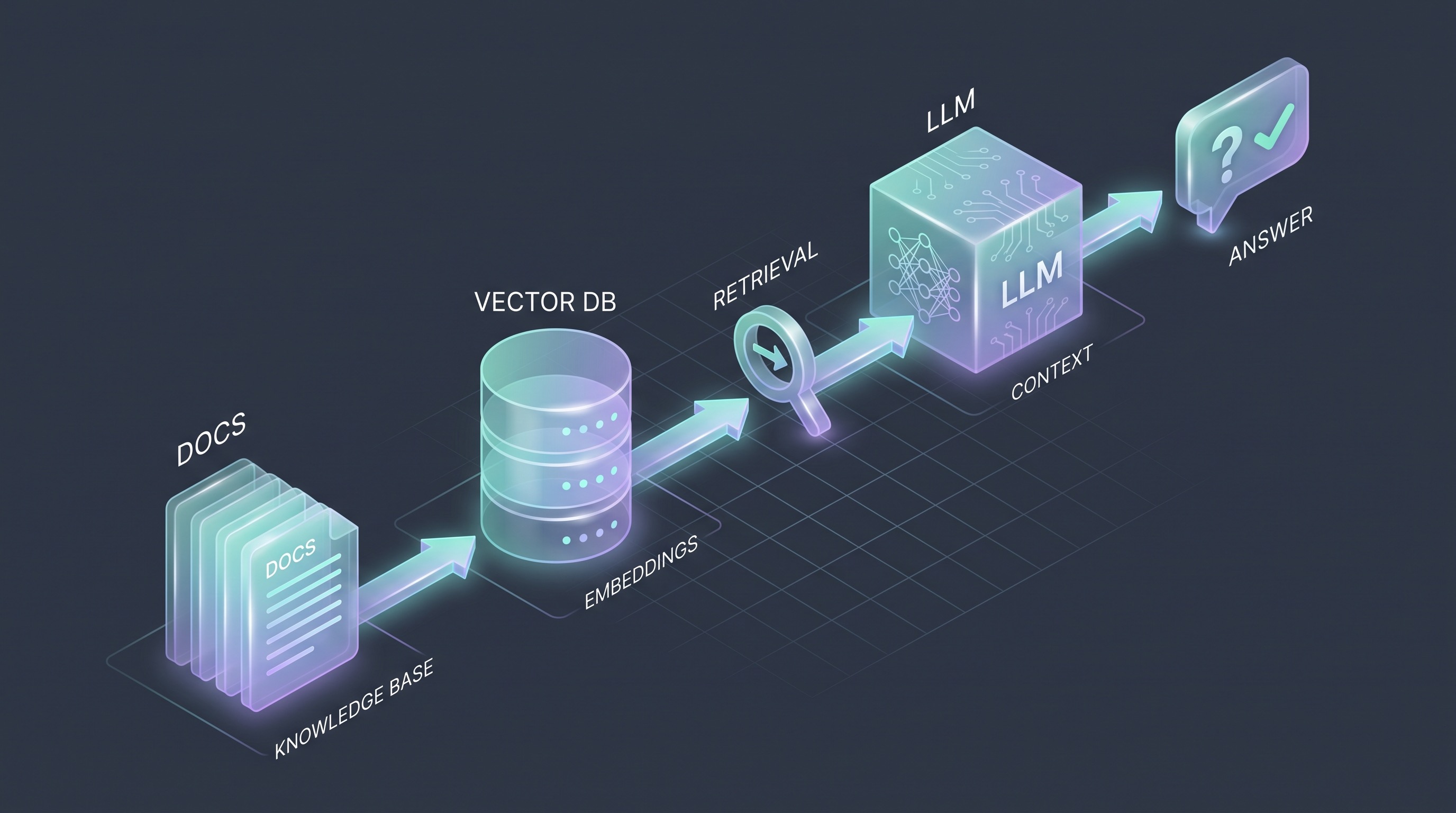 Retrieval in one picture: documents → embeddings → a vector store → the top matches pulled back into the model at query time.
What separates good AI engineers
- They treat the model as a stochastic component, not a magic oracle — designing for the failure cases, not just the happy path.
- They measure. Golden datasets, LLM-as-judge, regression tests on prompts.
- They think about cost and latency as first-class constraints, not afterthoughts.
- They know when not to use an LLM. Half of "AI features" are better as a regex, a lookup, or a small classifier.
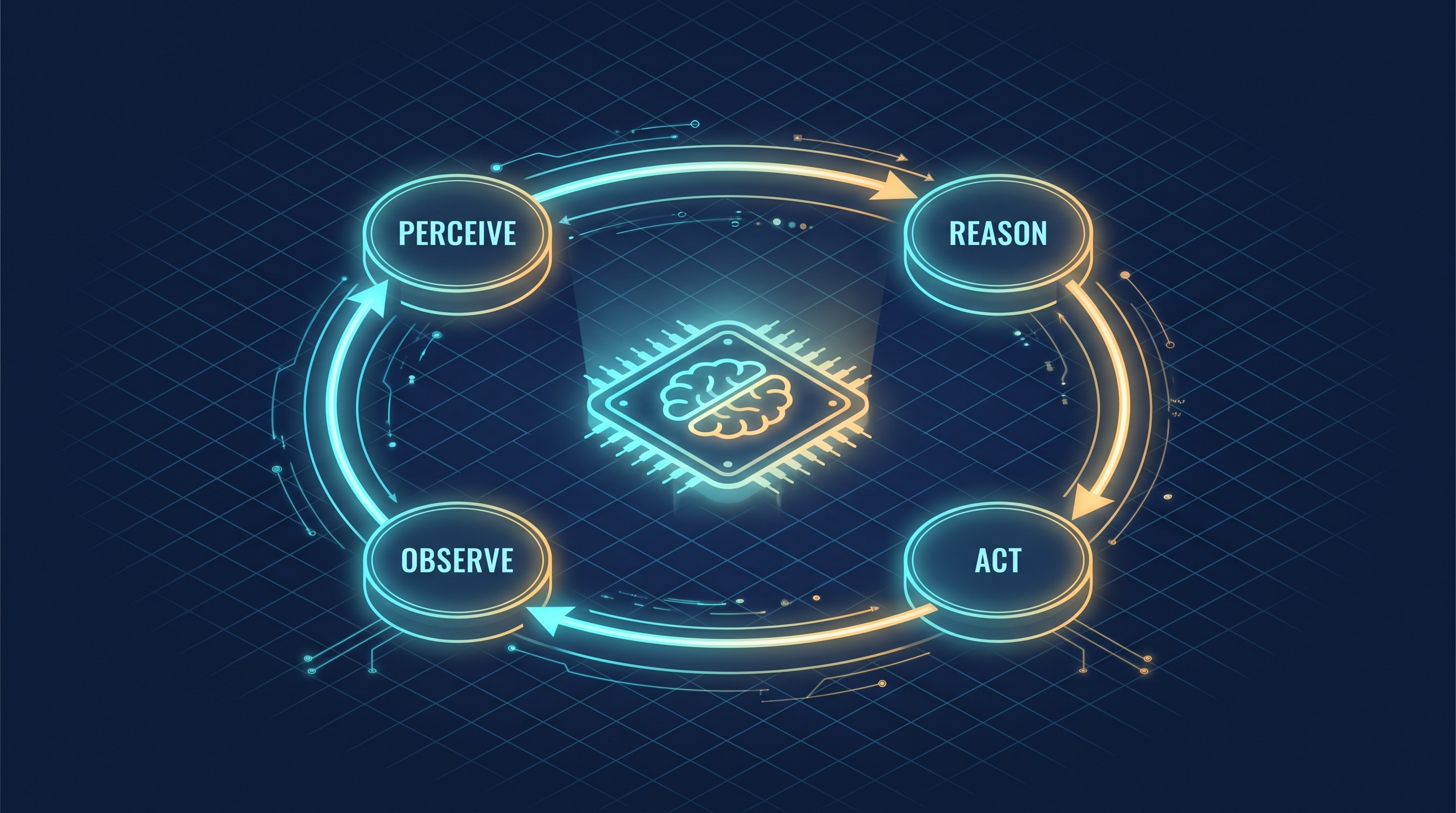 An agent is just this loop run until the job is done: perceive → reason → act → observe. Every arrow is a place reliability can break.
How to get into it
You need a real software engineering base first — AI engineering is "software engineering with a probabilistic dependency." Then: build things that call models, break them, measure them, and read the model providers' docs deeply (the good ones publish serious guidance on prompting, tools, and evaluation). Ship a small agent end-to-end; you'll learn more from one flaky agent than from any course.
 From model to product — an AI-built brand mark for a health app. This is where the value lands.
The opportunity
This field is young enough that a self-taught, ship-focused engineer can be genuinely frontier in a year — which is exactly why it's a strong wedge for a startup and a hot hiring area for OPT/STEM-OPT candidates.
Related: Software Engineering · Seed Funding · Opt Cpt Application