OPT & CPT — The Work-Authorization Playbook
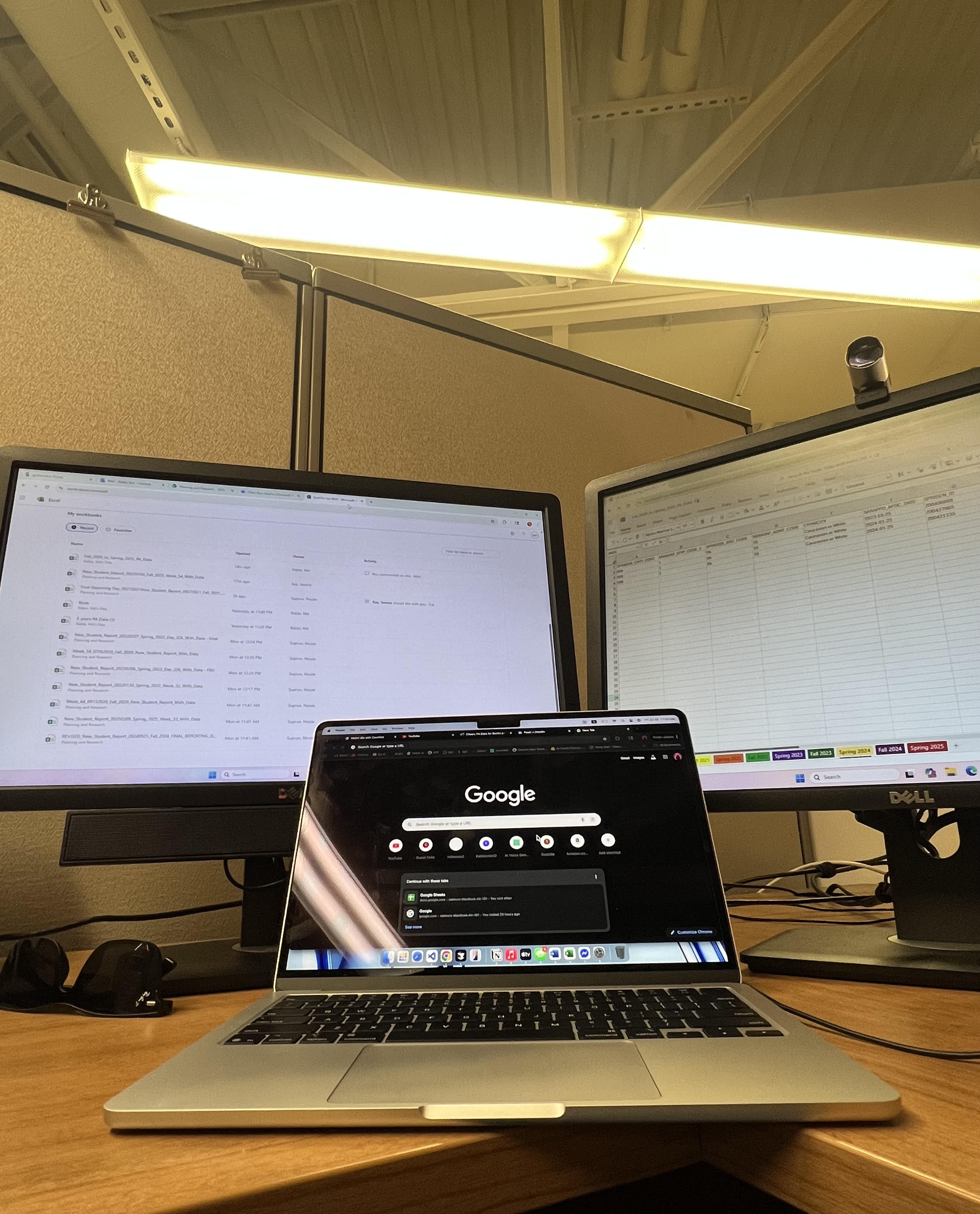 The whole point of CPT and OPT: legally sitting at a desk like this one.
For an F-1 student, CPT and OPT are how you legally work in the US. They're the bridge from "student" to "employed," and the difference between them trips up a lot of people. Here's the playbook.
⚠️ Not legal advice. Rules and fees change; confirm every detail with your DSO and USCIS. This is the mental model and the sequence.
CPT — Curricular Practical Training (work during studies)
CPT is work that's an integral part of your curriculum — an internship tied to a course or required by your program.
- Authorized by your DSO, printed on your I-20. No USCIS filing, no EAD card. This makes it fast — days, not months.
- Eligibility usually requires being enrolled for one full academic year first (some grad programs that require immediate CPT are exceptions).
- Part-time (≤20 hrs/week) or full-time (>20 hrs/week).
- ⚠️ The trap: 12+ months of full-time CPT eliminates your OPT eligibility. Part-time CPT does not. Never burn your OPT for a CPT internship without knowing this.
OPT — Optional Practical Training (work after, mostly)
OPT is 12 months of work authorization in your field of study. Most people use it post-completion (after graduation).
- Requires a USCIS filing: Form I-765, a fee (~$470), and a DSO OPT recommendation on your I-20. USCIS issues an EAD card — you cannot start work until it arrives.
- Timing window: apply from 90 days before your program end date to 60 days after. Processing runs ~3 months, so file at the earliest end of the window. Late filers lose working months or the whole benefit.
- Unemployment limit: 90 days of unemployment allowed during the 12 months. Go over and you fall out of status.
- Work must be related to your field of study — keep evidence of the connection.
STEM OPT extension — the big one for engineers
If your degree is a STEM field (most CS, engineering, data, AI degrees qualify), you can extend OPT by 24 more months — 36 total.
- Requires an E-Verify employer and a signed Form I-983 training plan.
- Raises the total unemployment allowance to 150 days.
- Requires periodic reporting and self-evaluations.
- This is what makes a US technical career realistic: 3 years of work authorization is enough runway for multiple H-1B lottery attempts.
The sequence that actually works
- Use CPT for internships during school (keep full-time CPT under 12 months).
- File OPT at the 90-days-before mark — don't wait for graduation.
- Land a STEM job with an E-Verify employer; file the STEM extension early.
- Have the employer enter you in the H-1B lottery each spring you're eligible.
- If the lottery keeps missing, look at O-1, cap-exempt employers, or other status paths.
 Three years of work authorization (OPT + STEM) is enough runway to build a real US career.
Why founders have it harder
If you want to start a company (see Seed Funding), OPT/CPT get complicated fast — you generally can't just "work for your own startup" on OPT without careful structuring (bona-fide employer-employee relationship, being paid, field-related). This is a real constraint on the international founder path and worth early legal advice.
Related: F1 Student Journey · International Student Journey Bangladesh To Usa · Seed Funding · Software Engineering